
Insights from an Urban Economist
Throughout history, people have moved to cities in search of opportunity. Today, urban areas generate close to 80% of global GDP, powering innovation, connection and long-term economic growth. As Africa undergoes the fastest urbanisation the world has ever seen, the question is no longer whether cities will grow, but how we manage this growth in a way that benefits everyone.
During our (Ad)venture Builder programme, we had the privilege of hosting Astrid R. N. Haas, an Austrian-Ugandan feminist urban economist based in Hong Kong. Astrid shared a deeply insightful presentation on the transformative potential of Africa’s urban transition, along with a clear view of the challenges we must address to unlock it.
This journal distills her key messages and the practical insights that emerged in our discussion, with lessons which matter for founders, investors and city builders shaping the next chapter of Africa’s urban story.
The Power of Urbanisation
Urbanisation represents one of Africa’s most significant levers for sustainable development. When well managed, cities transform nations.
Take London: in the early 19th century, the city struggled with overcrowding, disease and poverty. Today, it is one of the world’s most dynamic economic centres. That transition was driven by deliberate investment, innovation and long-term planning.


London in the 19th century. Source: BBC History Magazine | London today.
Africa stands at a similar inflection point. By 2035, half of the continent will live in cities. By 2050, one billion more people will call an African city home. This shift brings extraordinary potential if we manage it well.
Urbanisation: The Billion Person Opportunity
Urban growth on its own does not guarantee prosperity. Many African cities are expanding rapidly, but without the economic uplift seen in Asia or Europe.
Two Trends Driving Africa’s Urban Growth
Conflict and Displacement
People often move to cities for safety rather than opportunity. Urban centres have become refuges during conflict, accelerating growth without parallel job creation.
High Birth Rates
Two-thirds of Africa’s urban growth comes from natural population increase. This places immense pressure on already strained services and infrastructure (Mo Ibrahim Foundation, 2015, African Urban Dynamics).
Infrastructure Deficits and Economic Barriers
Infrastructure in African cities has not kept pace with population growth. Public transport is limited. Roads and water systems are stretched. Electricity grids struggle to meet demand. Informal economies dominate urban employment, reducing tax revenue and limiting public investment.
Astrid highlighted Kampala as an example. A city of 1.5 million swells to about 3 million during the day as commuters arrive. Its tax base cannot cover basic services. Mobility is expensive and inefficient, which restricts access to jobs and raises the cost of living.
Lessons from Global Cities
Cities that thrive all share common traits: dense employment clusters, reliable public transport and infrastructure that connects people to opportunity.
In London, millions of residents can reach major employment hubs within forty-five minutes. Most African cities lack this level of connectivity, but the path forward is clear.
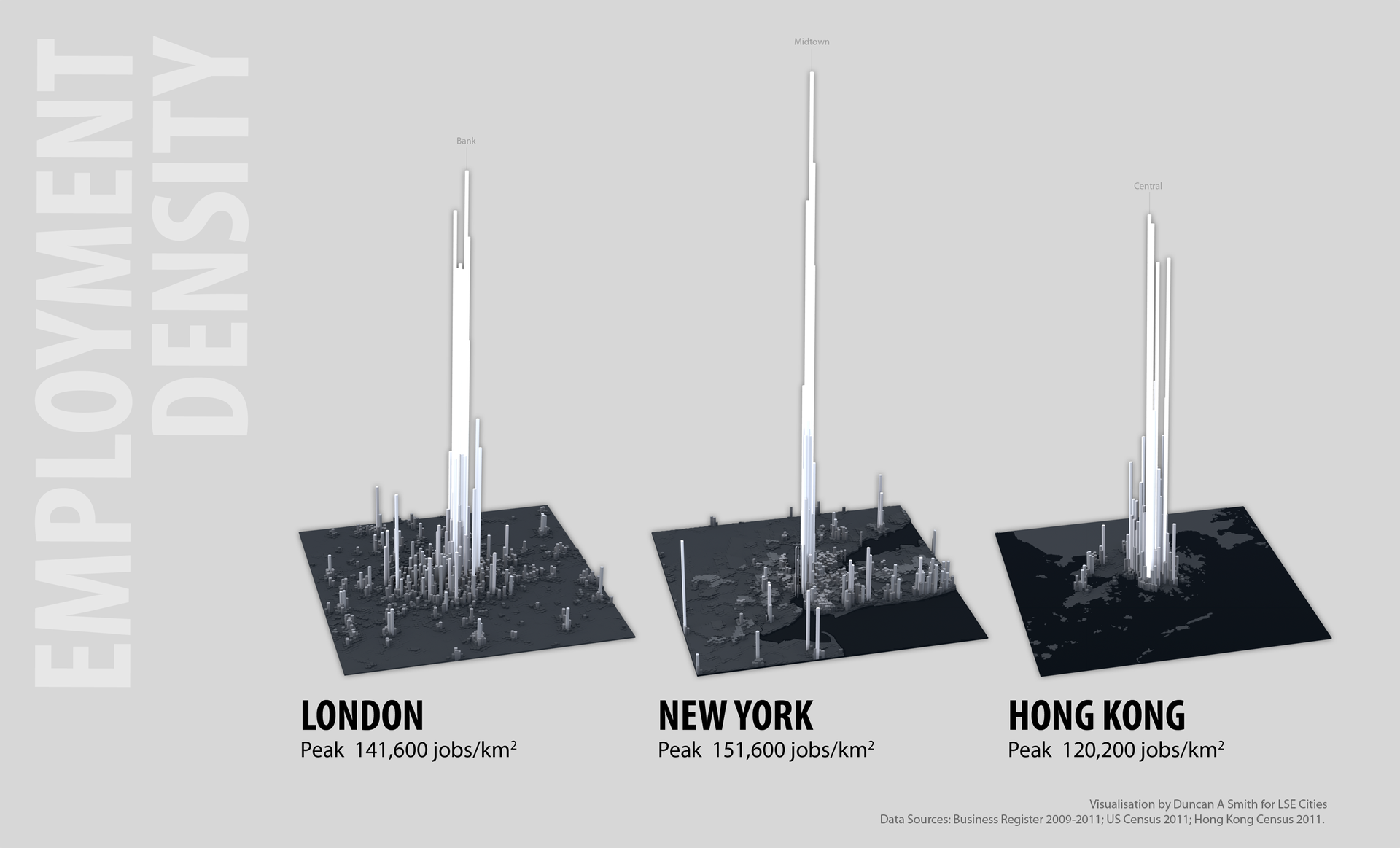
Sources: Business Register 2009–2011; US Census 2011; Hong Kong Census 2011. Visualisation by Duncan A Smith for LSE Cities
Unlocking Africa’s Urban Future
Africa’s urban transition can be a powerful engine for inclusive growth. Astrid outlined several key pathways.
- Create Economic Opportunities
Cities should stimulate private sector investment and support industries that generate large-scale employment.
- Invest in Infrastructure
Affordable housing, public transport and reliable utilities form the foundation of strong urban systems. Cities must grow upwards and inwards, not only outwards.
- Use Data to Plan Better
Technology can help track land use, transport flows and population growth. Good planning relies on good information.
- Build Inclusive Cities
Urban development must serve all residents. Avoiding exclusive enclaves and prioritising equitable investment helps build social cohesion.
- Plan for Climate Resilience
Urbanisation and climate planning must work together. Wetland restoration, green corridors and climate-conscious design can strengthen resilience and improve the quality of life.

“Our struggle for sustainability will be won or lost in cities.”
Ban Ki moon, former UN Secretary General
Real World Solutions to Inspire Action
Several African cities are already showing what is possible.
Somaliland has safeguarded corridors of land for future infrastructure, ensuring affordable and flexible planning. Kigali has created a one-stop shop for business registration, which has streamlined administration and attracted new investment.
These examples demonstrate what is achievable when cities plan ahead and put people at the centre of policy.
Africa’s urbanisation is not only inevitable. It is a once-in-a-century chance to shape a more prosperous and inclusive future. The next twenty to thirty years will determine the outcome.
We have the opportunity. Now we need action.
The Greenhouse is a six-week, high-reach online programme that brought together 373 founders from 31 Sub-Saharan African countries for a science-grounded journey of climate problem solving, prototyping, and community building. It has already grown into one of Africa’s strongest climate-science talent pipelines and now acts as the starting point for deeper technical support, venture building, The Lab, and Kinjani Projects.
GHG REDUCTION WINNER

Sara Usman from Rwanda is building Carbon Smart Spaces, a material intelligence tool helping developers and architects make low-carbon choices from day one. Her early results show that every 150 m² built can cut 40 to 50 tons of embodied carbon, a meaningful step toward cleaner, more resilient African cities.
Q&A Highlights
How can African cities attract more investment?
Simplify business registration, improve land administration and offer clear processes for investors. Kigali’s approach is a strong model.
How do we address informal?
Integrate informal businesses through incentives, support services and inclusive governance. Formalisation should be practical, not punitive.
What role does climate play in urban development?
Climate-conscious planning is essential. Nature-based solutions, such as wetland restoration and green infrastructure, support both resilience and economic opportunity