
Where Climate Pressure Meets System Change
Across Southern Africa, climate change is showing up in water systems under pressure, in farms adapting to shifting rainfall, in industrial sites navigating new constraints, and in infrastructure built for a climate that no longer exists [1]. Africa is also one of the fastest-urbanising regions in the world, which means the systems we build now will shape resilience, resource use, and opportunity for decades [2][3].
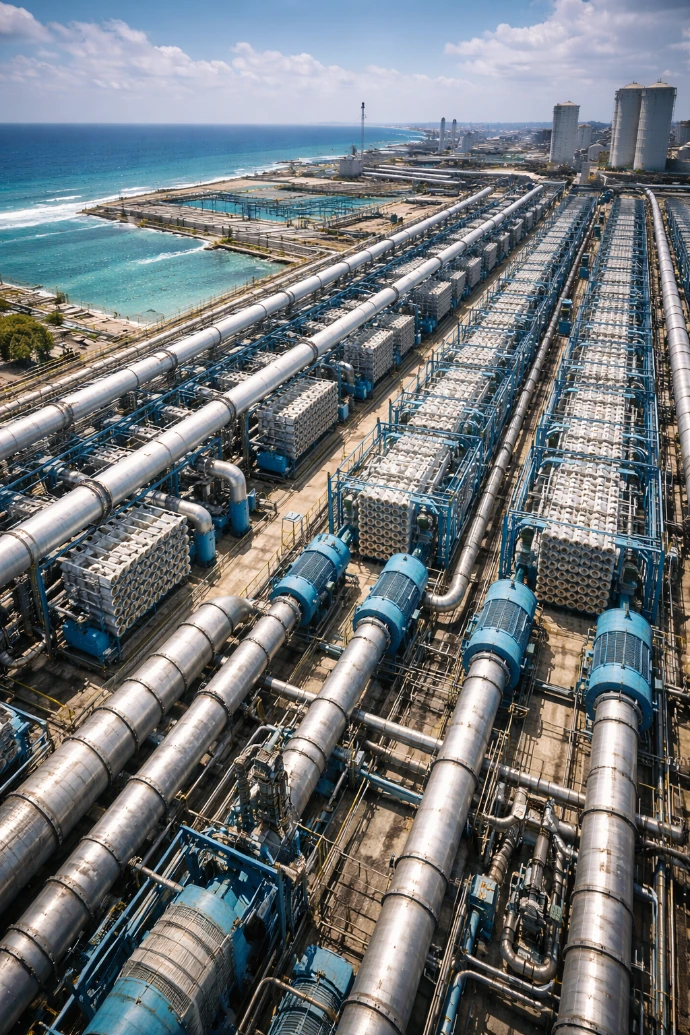
The talent to respond is already here. Scientists. Engineers. Operators. Builders. Founders who understand these systems because they have worked inside them, lived through their failures, and seen first-hand where the pain points are.
The issue has never been talent.
What slows progress is the stretch in between: translating technical insight into customer value, moving from prototype to pilot, finding the right commercial pathway, building evidence that holds up under scrutiny, and doing all of this without losing the human in the process.
We built the Kinjani Lab to close that gap, and it sits at the centre of everything we do: backing African climate talent from science to implementation [4].
FROM PROMISE TO PROOF
The Lab is for founders who are already building. They have a working science or technology, a prototype with early data, and a deep understanding of the problem because they’ve operated within the very systems they’re trying to fix. What they need is the structure to turn that into a venture that holds up in front of customers, partners, and investors.
That means getting sharper on where the science stands, where the commercial case is strongest, where the team is ready, and where the gaps still are. It means scoping pilots with more intention, building an investment case with real evidence behind it, and stress-testing assumptions before the market does it for you.
We work across mining, agriculture, water, materials, and frontier science, the sectors where science-led companies can shift how African industries actually operate [5]. These are complex markets with long sales cycles, technical buyers, and regulatory layers. The founders building in them need support that understands that complexity, not generic startup advice.

WHAT THE LAB ACTUALLY DOES
Over 12 weeks, that work takes shape. Founders move through a structured process from diagnosis to evidence, getting clearer on where the venture is strong, where the gaps are, and what it will take to close them.

Phase 1: diagnosis and direction:
Through a structured diagnostic and eight focused labs, founders come out of this phase with a clear picture of where the venture stands. Customers come into sharper focus, pilot opportunities are more intentionally scoped, and early thinking starts to form a more coherent investment case.

Phase 2: integration and refinement:
Founders come together in person, taking the strategy developed in Phase 1 and building from it: the vision for where the venture is going, the conviction to back it, and the resilience to hold the work when it gets hard. Part of that is a nature-based retreat, time to step back, think clearly, and build the capacity that carries founders through what comes next.
Phase 3: execution and proof
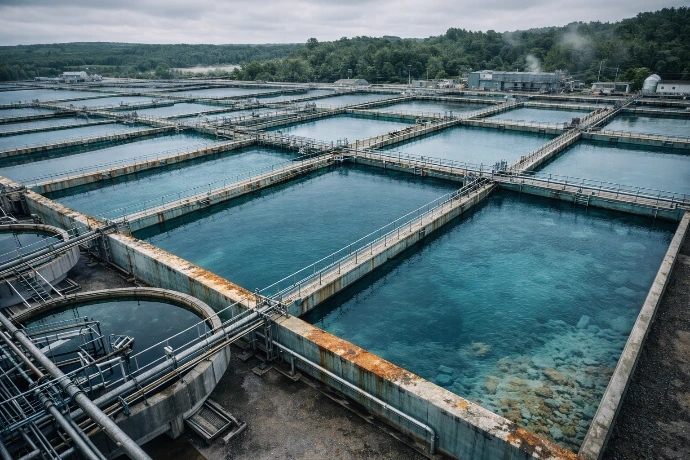
A group of 5-10 ventures receives returnable, non-dilutive grant funding to deliver against a clear workplan developed from phase 1 & 2 testing, piloting, or validating in the real world, and turn that into evidence strong enough to shape a pilot, bring in a partner, or support a funding decision. Founders are operating in market conditions, with paying customers or industry partners, generating data and feedback that can't be manufactured in an online workshop. Founders are able to walk away with evidence that gets the venture to its next inflection point.
WHY THIS APPROACH MATTERS
Too often, support for early-stage climate founders begins and ends with inspiration. A workshop here, a networking event there, some light-touch mentoring, perhaps even a deck at the end of it. Yet when the programme ends, many founders are left facing the same unanswered questions, the same capability gaps, and the same pressure to deliver in markets that are anything but simple.
For science-driven ventures working in complex sectors, that kind of support rarely allows the venture to reach its full potential.
If we want a stronger pipeline of African climate companies, we need to build differently. That means support that is practical, technically literate, and commercially grounded. Support that understands what it really takes to move from idea to implementation, and from technical promise to real-world traction.
This is why the Lab places equal weight on science, business, and people.
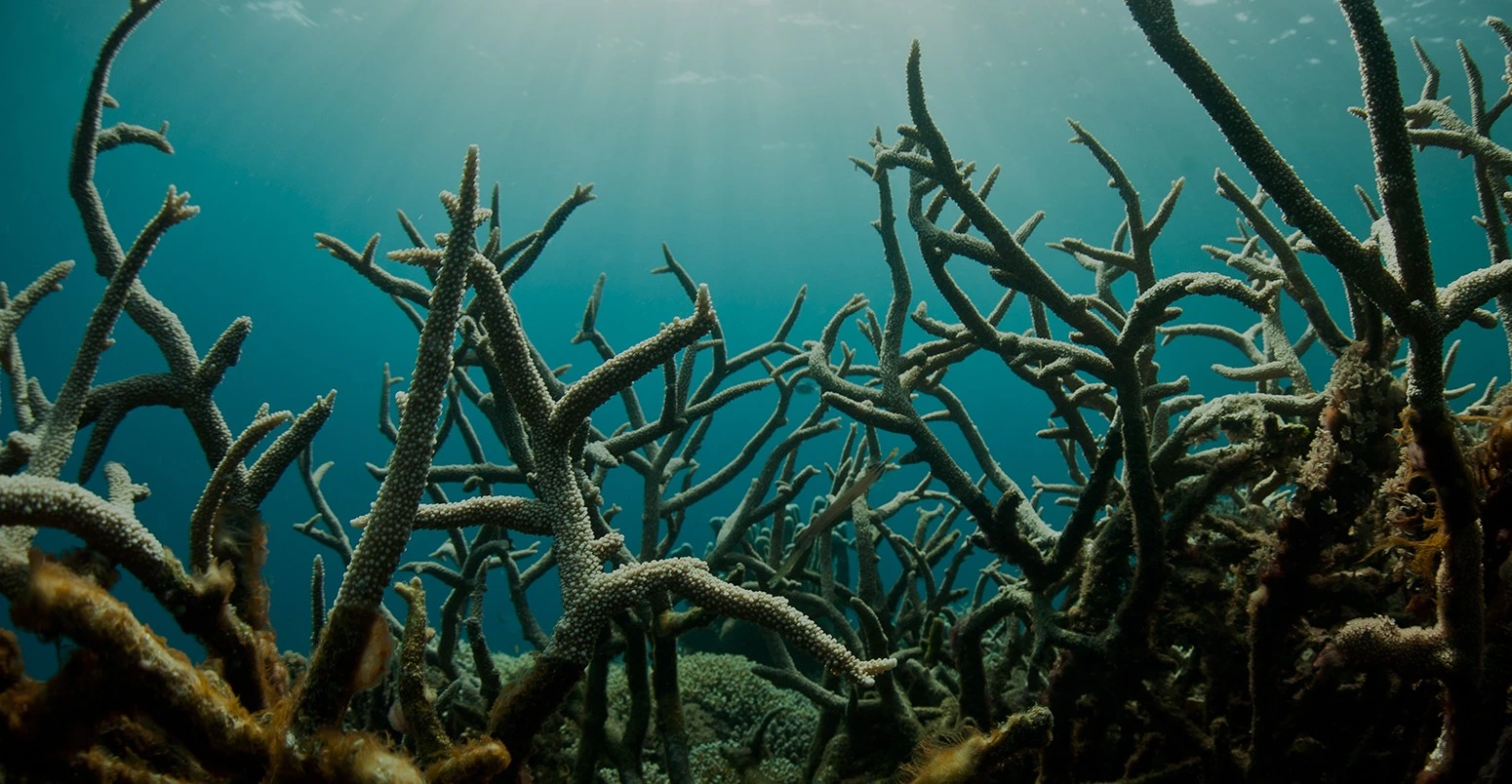
Science without business stays in the lab.
Business without science is strategy without substance.
Without a resilient founder, ventures do not endure.
FROM GREENHOUSE TO LAB
The Lab is not a starting point so much as a continuation. For a number of founders, it builds on work already begun in the Greenhouse, where early ideas are tested, assumptions are challenged, and the first signs of traction begin to emerge. Some of the winners from the Greenhouse are now part of the Lab, making this less a standalone programme and more a pipeline: one designed to help founders move from early signal to stronger proof.

AGTECH WINNER
Alimamy Bangura (Rwanda):
Developing a moringa-based nano-fertiliser and low-cost storage system, improving yields by up to 40% and reducing post-harvest loss by 25%.
WATER TREATMENT WINNER
Michèle Schiess (South Africa):
A vortex entrainer retrofitted into effluent pipes, with potential to reduce harmful pollutants by more than 80% and sequester 20 MtCO2e if adopted at scale.
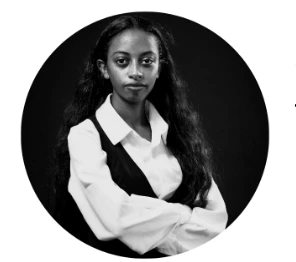
GHG REDUCTION WINNER
Sara Usman (Rwanda):
Carbon Smart Spaces, a material intelligence tool that reduces embodied carbon in buildings by 40–50 tons per 150 m² built.
BUILDING THE KIND OF VENTURES AFRICA DEMANDS
This type of work asks for more than optimism. It asks for ventures that can navigate complexity with confidence, ventures that understand industrial systems as deeply as they understand climate risk, and ventures rooted in local realities but ambitious enough to shape global markets. It asks for companies that can hold credibility with scientists, make sense to customers, and attract the capital needed to grow. That is what the Kinjani Lab is building: real ventures, tested in context, and ready to carry Africa’s climate talent into the industries that come next.
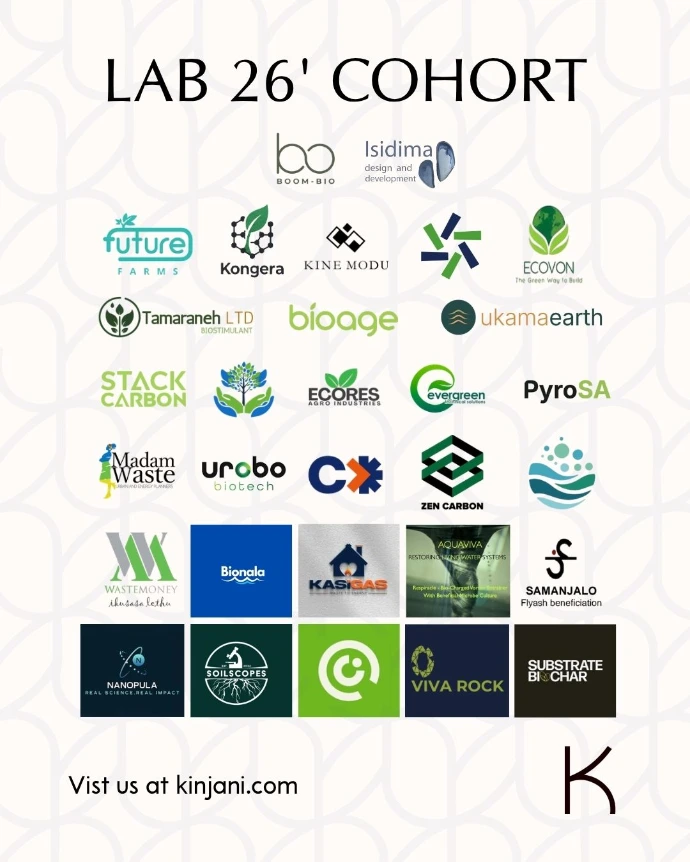
THE FINAL 30
This year’s Lab cohort brings together 30 ventures building across climate, industry, and regeneration. Together, they reflect the breadth of innovation emerging across the region: founders working across mining, agriculture, water, waste, materials, and frontier science, and building ventures grounded in the realities of African markets. Some are continuing on from the Greenhouse. Others are entering the process at a different stage. What connects them is a shared commitment to building solutions that can hold up in the real world.
References
[1] Scholes, R. et al. Climate impacts in southern Africa during the 21st century (2021).
[2] UN-Habitat, The World Urban Forum returns to Africa: Join us in Cairo for WUF12 (9 September 2024).
[3] World Bank, An Anatomy of Urbanization in Sub-Saharan Africa (2023).
[4] Kinjani, Kinjani Reimagined: Same Vision; New Look & Feel (1 September 2025).
[5] Kinjani, Beyond the Headlines: Africa’s Bold Vision for Regenerative Industries (13 February 2026).