
Reflections from Two Workshops on mCDR in Africa

Marine carbon dioxide removal, or mCDR, is no longer a distant scientific idea. It is an emerging field of climate action focused on increasing the ocean’s natural ability to absorb and store carbon dioxide from the atmosphere. That matters because the scale of the climate challenge is now too large to ignore. Current estimates suggest that roughly 7 to 9 gigatonnes of carbon dioxide removal may be required each year alongside deep emissions cuts if the world is to stay within safer climate limits. At the same time, the ocean is already absorbing around 90% of the excess heat caused by global warming, helping buffer what we feel on land, but at growing cost to ocean health. It has also become about a third more acidic since the industrial era as it absorbs more carbon, with consequences already visible for coral, shellfish and wider marine ecosystems.
Africa has 38 coastal countries, extensive shorelines, major marine ecosystems, relevant mineral resources, growing technical expertise and a great deal of under-recognised local and indigenous knowledge. In addition, Africa still receives less than 1% of global climate R&D funding. Across much of the continent, mCDR research remains sparse, regulatory frameworks remain weak or absent, and capacity across science, governance and finance is uneven.
That was the starting point for two workshops held last week on the potential for mCDR in Africa.
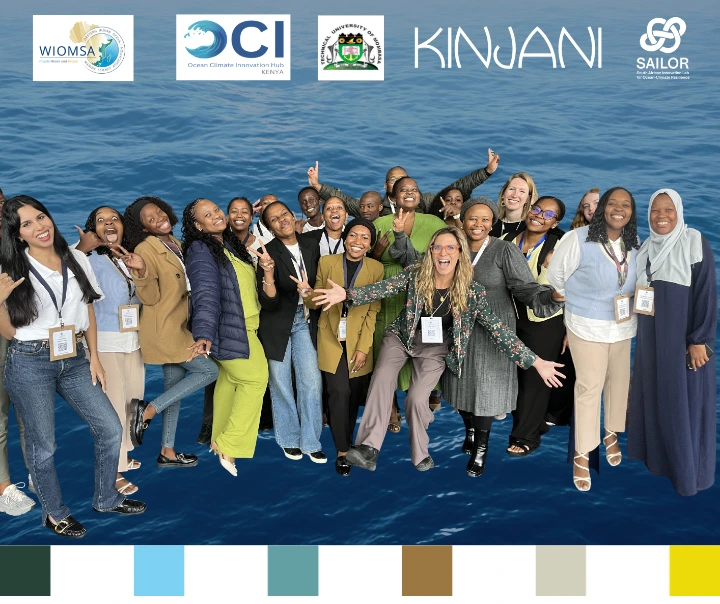
SAILOR was asked to help lead both sessions, co-hosting with Ocean-Climate Innovation Hub Kenya and WIOMSA. The first took place during Ocean Innovation Africa in Durban, bringing together researchers, practitioners, innovation hubs, civil society actors, municipal representatives, industry players and funders already working across ocean and climate systems. The second took place in Johannesburg with SADC member state representatives and technical advisors, bringing the discussion into a more regional policy and government setting.
These were not isolated conversations. They formed part of the wider Africa mCDR Roadmap process that has been taking shape over the past year and a bit. Through gatherings in Dar es Salaam, Mombasa after the WIOMSA Symposium and a more recent writers’ workshop in Nairobi, to draft the report.The draft report is expected to open for public consultation in June at the Our Ocean Conference in Kenya.
SAILOR South African Innovation Lab April 2026 In collaboration with WIOMSA & for Ocean-Climate Resilience Ocean-Climate Innovation Hub Kenya
The Africa mCDR Roadmap has created a space for information sharing and discussion on how more data can be collected to increase our understanding of emerging science. Early discussions in Dar es Salaam opened the first continent-level conversations around what mCDR is, why it matters and what African countries would need to respond on their own terms. Sessions in Mombasa then deepened the focus on capacity building, science, early governance questions and regional relevance.
The workshops have revealed that the main objective is: to move the conversation beyond curiosity and toward credible science and African leadership. Building a foundation for how African institutions might engage this field on their own terms.
In the African context, three key issues have been identified: i) Africa needs to shape the mCDR field early; ii) It needs to connect ocean-climate innovation to real public benefit and;ii) it needs to build the scientific, institutional and social conditions for responsible progress before outside norms harden around it.
Africa needs to shape the mCDR field early
The clearest message from both sessions was that Africa needs to play an important role in the development of mCDR. This means that African institutions, researchers, communities and governments should define what responsible mCDR looks like while the field is still taking shape, before its standards, financing models and governance assumptions are set elsewhere.
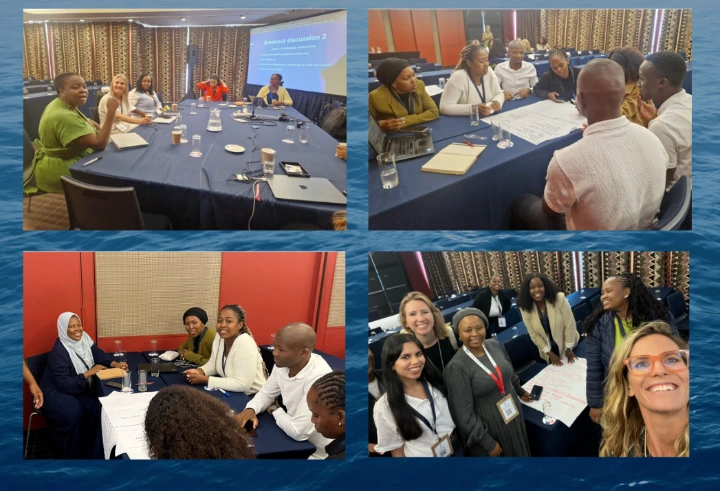
The discussions from the workshop in Durban was built around a deliberately practical question: what conditions are needed for mCDR research and early pilot design to work in unison with people, ecosystems and industry in African contexts? This aligned the discussions towards what is actually credible and achievable in a short and medium term (1-3 year) period.
It was established that the conditions required for responsible research and early pilot design will have to be determined. Hence, there’s a need for strong and credible science, robust monitoring and verification, infrastructure and observation, governance readiness, financing pathways and meaningful community engagement. This will help in avoiding extractive patterns and safeguard the ecosystem and livelihoods.
SAILOR South African Innovation Lab April 2026 In collaboration with WIOMSA & for Ocean-Climate Resilience Ocean-Climate Innovation Hub Kenya
Connecting ocean climate innovation to existing infrastructure
A notable shift in both workshops was the move away from treating mCDR only as an offshore or purely oceanographic question. The discussion became more persuasive when it moved closer to systems that governments, municipalities and infrastructure operators already care about. Water treatment works, desalination systems and coastal industrial facilities may become some of the most practical entry points for how mCDR is studied, tested and understood in real contexts.
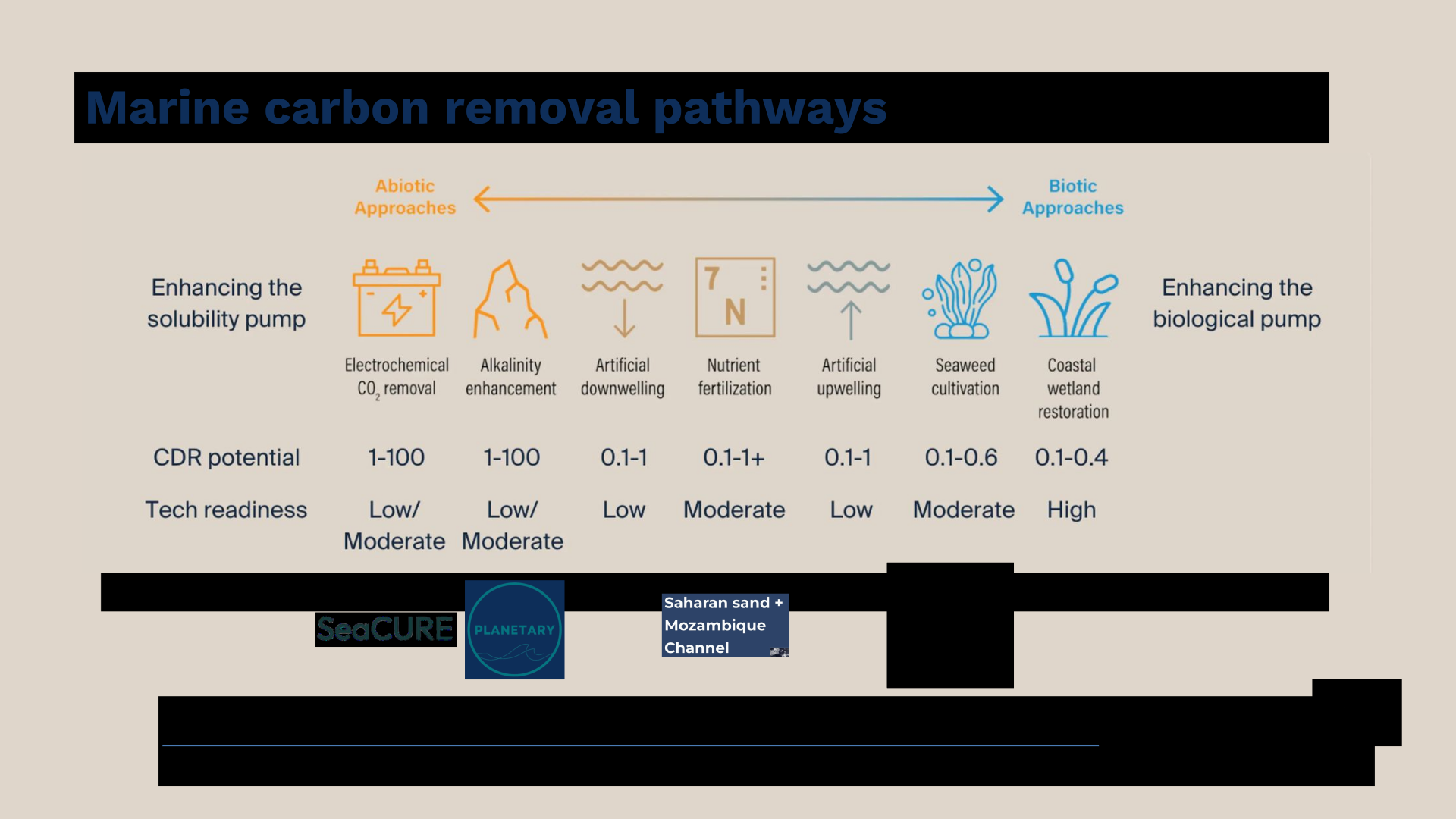
This is especially relevant for ocean alkalinity enhancement and related electrochemical approaches. These are no longer only conceptual. Ocean alkalinity enhancement is already being piloted in different parts of the world, and practical use cases are being explored in tandem with wastewater treatment works, desalination systems and other coastal facilities. That matters because these are real systems with public relevance, operational constraints and existing permitting environments.
As these are semi-closed systems, they may also offer more manageable conditions for early-stage work. Open-ocean systems remain complex and difficult to monitor. Water treatment and desalination infrastructure can provide more controlled or semi-closed environments where researchers and operators can test, observe and learn before broader progression is considered. Hence, the pilot project makes the public value case more tangible.
In the African and Latin American coastal context, climate stress is increasingly showing up through water scarcity, salinization, flood risk, storm exposure and pressure on coastal infrastructure. If ocean-climate innovation can be linked to systems that strengthen water security, improve infrastructure resilience or reduce exposure for key industries, then the conversation changes. It will no longer only be about carbon removal. It becomes about how ocean-climate innovation can support resilient coastal economies and more stable public systems.
An emerging alliance between South Africa and Chile seems strategically important at this stage. What makes that relationship promising is not only the geographic link between two coastal countries in the global South. It is the integrated frame it brings. Rather than treating mCDR as a narrow carbon issue, it connects ocean-climate innovation to water security, desalination, watershed resilience, coastal ecosystem restoration and climate-resilient infrastructure. It also recognises that facilities such as desalination plants, industrial coastal zones, ports and energy hubs can serve as innovation platforms in their own right, hosting observation systems, applied research, carbon monitoring and technology testing.
Taking into consideration the next phase of mCDR, it closely reflects the outcomes of both workshops: progress in this space is likely to depend less on dramatic standalone pilot claims and more on whether ocean-climate approaches can be embedded into real systems that matter to governments, communities and infrastructure operators.
Scientific, institutional and social conditions
Justice, accountability, participation and public value are a key part of mCDR in the African context. If ocean-based carbon removal is ever to be explored responsibly in African settings, it is important to know who is informed, who decides, who benefits, who bears the risk, and how legitimacy is built over time.
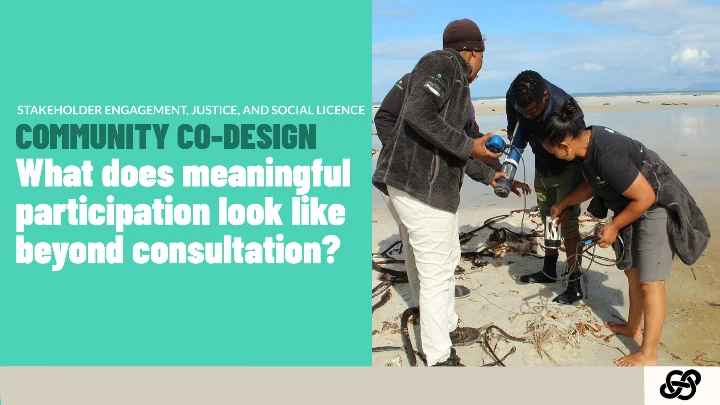
Participants in the Durban workshop discussed the importance of co-designing from the beginning. This includes stakeholder mapping, which was explained as which stakeholder should be involved and at what point depending on relevance and power. The stakeholders included, policy makers, regulators, coastal communities, small-scale fishers and other ocean users whose lives are bound up with these systems in immediate and material ways. Stronger consultation processes, more inclusive governance and greater transparency around risk, benefit sharing and accountability all emerged as necessary conditions.
The discussions determined what responsible progression would actually look like in the African context. This will guide the activities and science needed before early pilots can be considered credible, and what should be avoided in order to safeguard the people and environment. Lastly, what would good progress look like in the next three years.
Stronger baseline science came up first. Because the ocean is an open and dynamic system, marine carbon removal cannot rely on loose assumptions. It needs robust local data, stronger oceanographic understanding, better monitoring, reporting and verification, and clear thresholds for what remains premature.
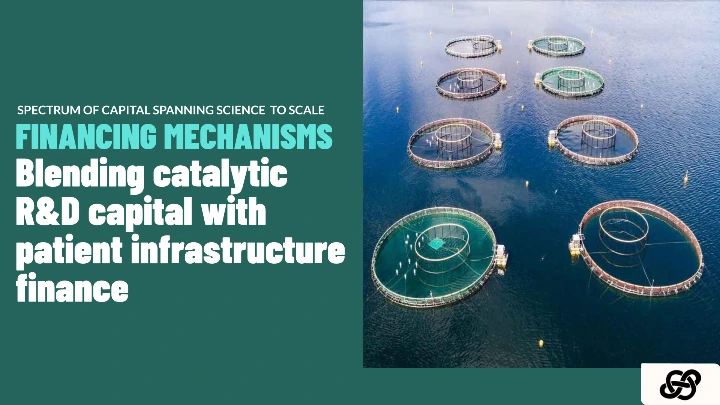
Broader capacity building came up next. Not only scientific capacity, but capacity across research institutions, government departments, municipalities, funders, industry and communities. Policymakers need enough grounding to assess proposals well. Communities need access to information that is clear enough to support meaningful participation. Funders need to understand the difference between early-stage research and mature infrastructure, and blend the right types of capital together to go from early research & development (R&D), piloting to scaling infrastructure.
Local ownership came up repeatedly. There was a strong concern that climate innovation fields too often become spaces where technologies are developed elsewhere and then trialled in African contexts with only shallow local involvement. Participants discussed the importance of African research leadership, stronger institutional representation and real influence over system design, not only implementation.
Two rooms, one shared message
The contrast between the audiences in Durban and Johannesburg enriched the outcomes from the workshops.
In Durban, at Ocean Innovation Africa, the discussion was deliberately cross-sectoral. People came into the room from innovation, municipal systems, research, communications, ocean practice, investment and civil society. That created a textured conversation about real-world use cases and the importance of communicating this field in ways that are not exclusionary.
In Johannesburg, with SADC members and technical advisors, the discussion moved more directly into regional coordination, ministry mandates, regulatory gaps, training needs and how member states might take this information back into their own institutions. There was clear interest from countries including South Africa, Seychelles and Mozambique, and a strong recognition that the issue crosses multiple portfolios, from environment and fisheries through to blue economy, water and climate.
SAILOR South African Innovation Lab April 2026 In collaboration with WIOMSA & for Ocean-Climate Resilience Ocean-Climate Innovation Hub Kenya
The field is early, but it is not standing still. Some pathways are already being tested globally. The question is whether African countries will be ready to respond with confidence, evidence and legitimacy when it matters.
The key message
The key message from these two workshops is not that Africa should move fastest. It is that Africa should move with enough scientific rigour, enough institutional readiness and enough local authorship to shape this field well.
That is what the Africa mCDR Roadmap is beginning to make possible. It is not forcing consensus too early. It is creating a structure through which a difficult and fast-evolving field can be engaged carefully, publicly and with increasing regional ownership. And with the draft report expected to open for public consultation in June at the Our Ocean Conference, that process is about to enter a more visible and participatory phase.
If done well and the right foundations are built around it, it means more African-led research. Better baseline data. Stronger stakeholder mapping. Better communication. Real co-design. Clearer governance. Greater funding readiness. And a more deliberate understanding of where water infrastructure, coastal systems and ocean-climate innovation might meet in ways that create real public value.
For more details, check out: https://sailor-ocean-climate-futures.com/